

AHDB’s latest fungicide performance curves show that while there are sensitivity shifts to SDHI chemistry, Revysol’s efficacy and stability endures.
Safeguarding new chemistry was a hot topic at the recent AHDB Agronomy Conference. The 2025 fungicide performance curves identified new field mutations, particularly in solo SDHI-treated fungicide performance plots.
“With SDHI resistance becoming more prevalent and complex, it is essential to incorporate resistance management when building fungicide programmes,” says Steve Dennis, BASF Head of Business and Technical Development.
The fungicide performance curves highlighted the stability of Revysol, showing its consistent strength against septoria and rusts. Across 12 septoria trials between 2023 and 2025, at 50% full rate, Myresa (Revysol) delivered a 0.2t/ha yield increase over Vimoy (Iblon). While across three yellow rust trials it delivered a 0.1t/ha yield uplift (at 50%) compared to the new SDHI.
“The star-quality of the Revysol-based fungicide, Revystar XE, is its unique ability to protect itself, and other chemistry, against the development of resistance,” says Steve.
“Despite facing increasingly variable conditions over the last six years, Revystar XE continues to deliver effective control of fungal pathogens like septoria, rusts and ramularia, at excellent value. Importantly, it enables higher resistance risk chemistry to be used with confidence.”
Prepare for the unexpected
“Historically, septoria was a reliable feature of every growing season and the primary target of all wheat fungicide programmes,” he continues. “However, since 2010, higher temperatures, continued variability in rainfall, together with the rise and fall of varietal resistance, means we’ve had years where other diseases have become the primary target.”
“Today, growers need to be prepared for any of the diseases to dominate and there’s great value associated with those products which can deliver broad spectrum control, particularly at T1,” says Steve.
BASF Field Sales Manager, Matt Keane agrees: “Revystar XE tends to be used at T1 where the Revysol protects leaf three against septoria, while the Xemium element offers eyespot activity, as well as adding to yellow rust and brown rust protection. The active ingredients complement each other to deliver all round control.”
Combatting resistant strains
In comparison with SDHIs and strobilurins, which tend to see a step-change in performance, resistance to azoles is more gradual but none have maintained their efficacy like Revysol. That, says Matt, is due to the molecule’s unique structure.
“Revysol was the first, and is the only, isopropanol triazole in the market,” he says. “It is different, and that is what is needed when combatting resistant strains.”
The isopropanol part of the Revysol molecule flexes. This pliable hook allows the molecule to assume different positions and to bind with the fungal pathogen’s target enzyme.
“In short, Revysol binds quicker, stronger and better than any other triazole,” explains Matt. “Its flexible molecule is especially valuable when controlling shifted strains where the binding site has changed, and older triazoles can’t attach anymore,” he adds.
Safeguarding solutions
As well as protecting the performance of Revystar XE, this feature enables Revysol to protect other fungicides in the programme.
“Tebuconazole and prothioconazole have limited ability to control shifted strains. Revysol, however, is still effective and does the heavy lifting which reduces both the pressure and exposure on higher resistance risk actives, extending their lives,” says Matt.
“Newer SDHIs like isoflucypram and pydiflumetofen, are mixed with prothioconazole. It is this newer chemistry (SDHIs) that is doing the ‘heavy lifting’ and subsequently is not being protected. This is also the case in older chemistry that is reliant on SDHIs.
“AHDB’s 2025 dose response curves shows how this can affect the efficacy of higher resistance risk products if it is not managed elsewhere within the programme.”
Steve recommends the inclusion of at least one Revysol application in all UK wheat spray programmes to help safeguard solutions and to deliver sustainable control.
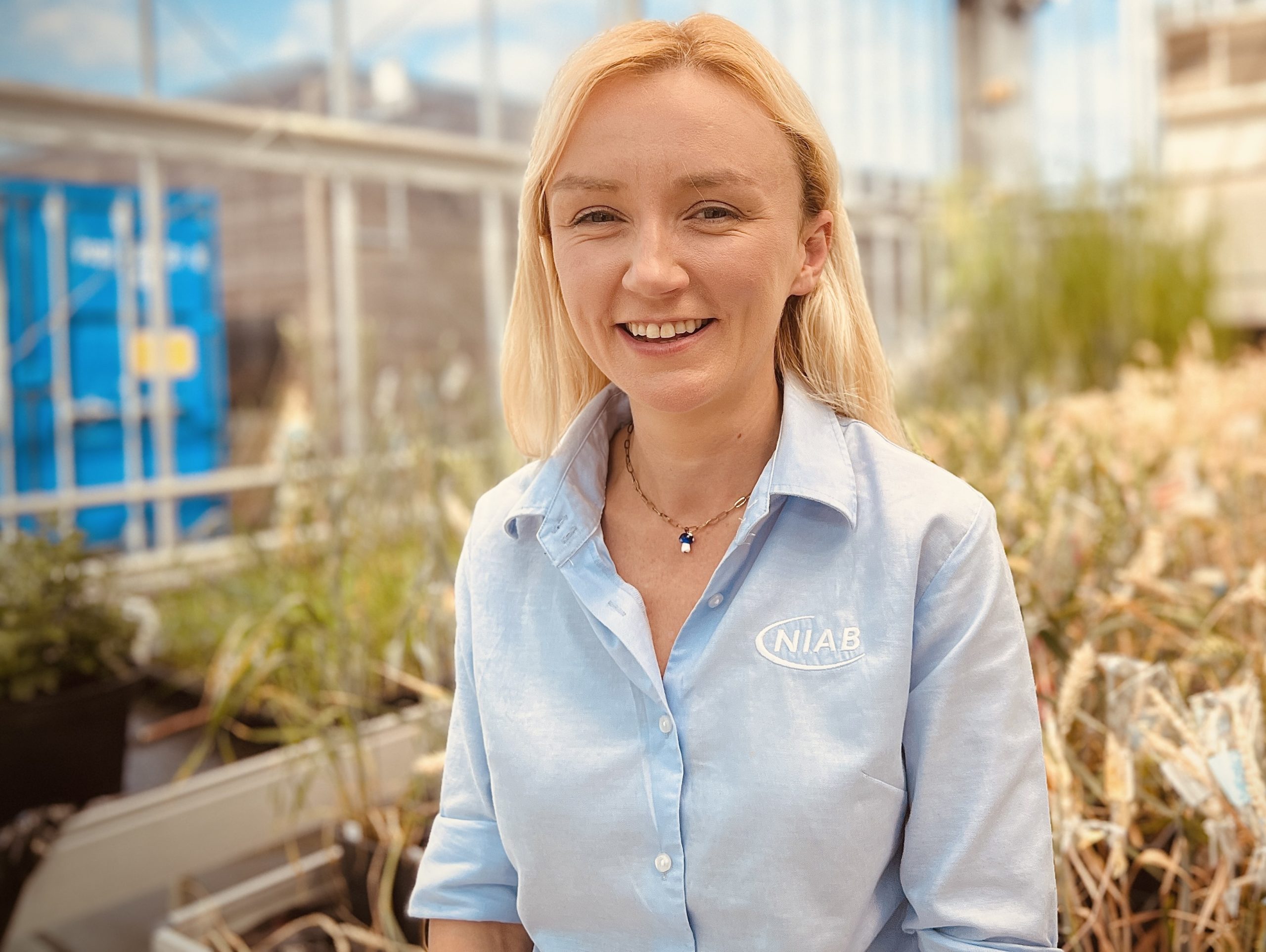
This is supported by Niab’s, Dr Aoife O’Driscoll, “We require azoles as the backbone of all fungicide programmes at T1 and T2, and because tebuconazole and prothioconazole have only modest activity, Revysol has to be in there in some form. Both biologically and agronomically, it’s very important to have Revysol in the programme.”
“Revystar XE brings stability to fungicide programmes,” surmises Steve. “It is effective in its own right, while allowing newer chemistry to be used safe in the knowledge that resistance management isn’t being compromised.”