
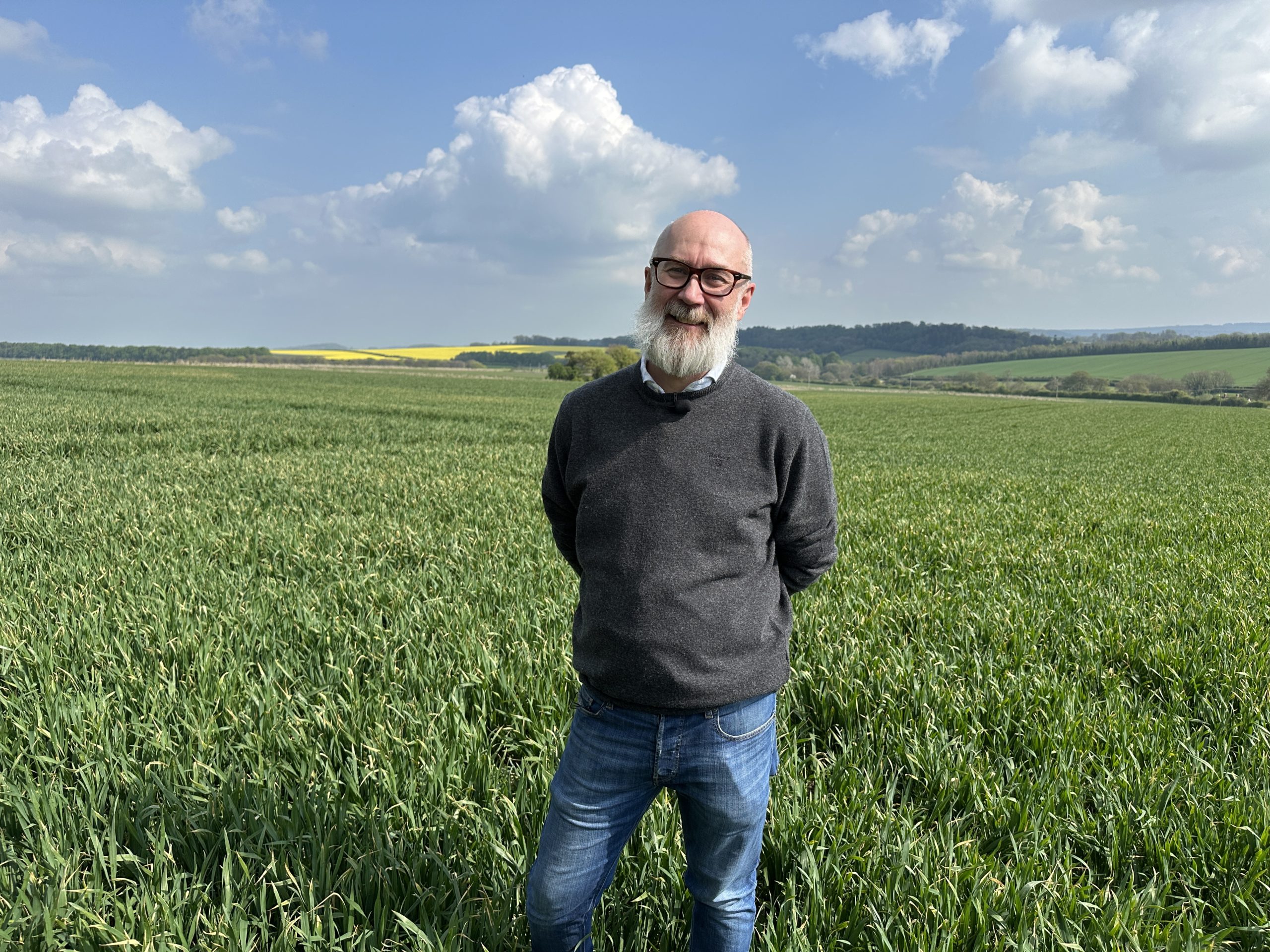

A kinder, more open autumn allowed winter barley crops to establish well and now, with good yield potential evident in these crops, and spring crops emerging in good conditions, growers are planning their fungicide programmes to ensure this potential is delivered.
In the Scottish Borders Neil Ramsay, farm manager of Hamish Morison Farming Limited has 800ha of combinable crops, comprising winter oilseed rape, winter barley, spring barley, winter wheat, and vining peas in the rotation.
Neil said, “There have been comments in the Borders that winter crops are looking as good as they’ve ever looked. We have 150ha of LG Capitol and LG Caravelle winter barley in this year and I’ve got some very strong fields with lots of potential.”
The recent volatility in input costs is at the forefront of grower’s minds, however, this season they will not have as great an effect on the business as they might have in the future.
Neil explained, “We had fertiliser bought at the right time, we bought it in July last season, so we are not holding back on fertiliser, everything is getting the planned amount.
“Fuel usage costs will be up as tanks weren’t filled at the right time so we will be hit by that, but we’ll have to carry on as usual. However, crop potential is there so we will not be cutting back on inputs, they’ll be getting a good fungicide programme.
“Winter barley has come through the early spring big temperature swings with a little bit of mechanical damage and some scorching with fertiliser and sprays, however, they are set up pretty well.
“There was a lot of Rhynchosporium in these crops which has been dealt with through a bit of old chemistry; some prothioconazole and cyprodinil at T1. This does a bit of the legwork for the newer chemistry at T2 where I am concentrating on ramularia.”
Neil is planning an application of RevyPro® (mefentrifluconazole (Revysol ®) + prothioconazole) at T2 which will be going on in the next week.
He said, “T2 is where RevyPro will come into play, for ramularia. We value the Revysol as it lends itself to longevity of the crop and you can never tell if it’s going to be a ramularia year, so I think setting yourself up for the best return is where we need to be with the barleys.
“I had a little experience with RevyPro last year and I would say it was put up against some of the big hitters, and it performed every bit as well.”
Jared Bonner, Business Development Manager Cereal Fungicides, BASF, said “At T2, RevyPro is a strong option. Revysol is the strongest azole for ramularia and in RevyPro we are bringing together two azoles, Revysol and prothioconazole, which cover all of the major barley diseases, protecting the yield that has been laid down through to harvest. Its unique formulation gives an enhanced uptake of the prothioconazole and that boosts disease efficacy alongside the Revysol.”
The 120ha of spring barley in the rotation has all been in the ground for a month now and is all rowed up and has had fertiliser.
Neil said, “We will be using RevyPro on spring barley as well. That will be our T2 spray. Again, we are using it because of the ramularia threat and as a protectant approach to Rhynchosporium.”
In Monmouthshire, Chris Taylor of Down to Earth Agronomy offers independent agronomy services in Wales and the West of England.
There, as he explained, “It was probably a kinder more open autumn than we have experienced recently. In terms of autumn establishment, understandably, there was a bit of a knee jerk reaction from growers to get crops in early in case the weather did break, but it stayed quite open, so crops are now pretty forward in terms of growth stage.”
He added, “It was very wet at the start of the year, which for some growers meant spring ground conditions delayed fertiliser applications. Often this leads to thinning of the crop, but it does seem to have held tillers well this year. On the whole winter barley is looking good.”
KWS Tardis, grown for feed, is the most commonly grown winter barley variety in Chris’ area. “I have already been recommending RevyPro on my winter barley at T2, it fits nicely technically and price wise.
“Ramularia is getting more challenging and you have to be looking at preventative measures rather than curative. I sleep better at night when I have covered it off well.”
Jared added, “Ramularia can cause significant yield losses, and it is all about being preventative. It really needs a programmed approach to ensure primary diseases are controlled and crop stress is minimal. To further reduce stress growers should avoid complex tank mixes and ensure the correct nutrition is met.”