
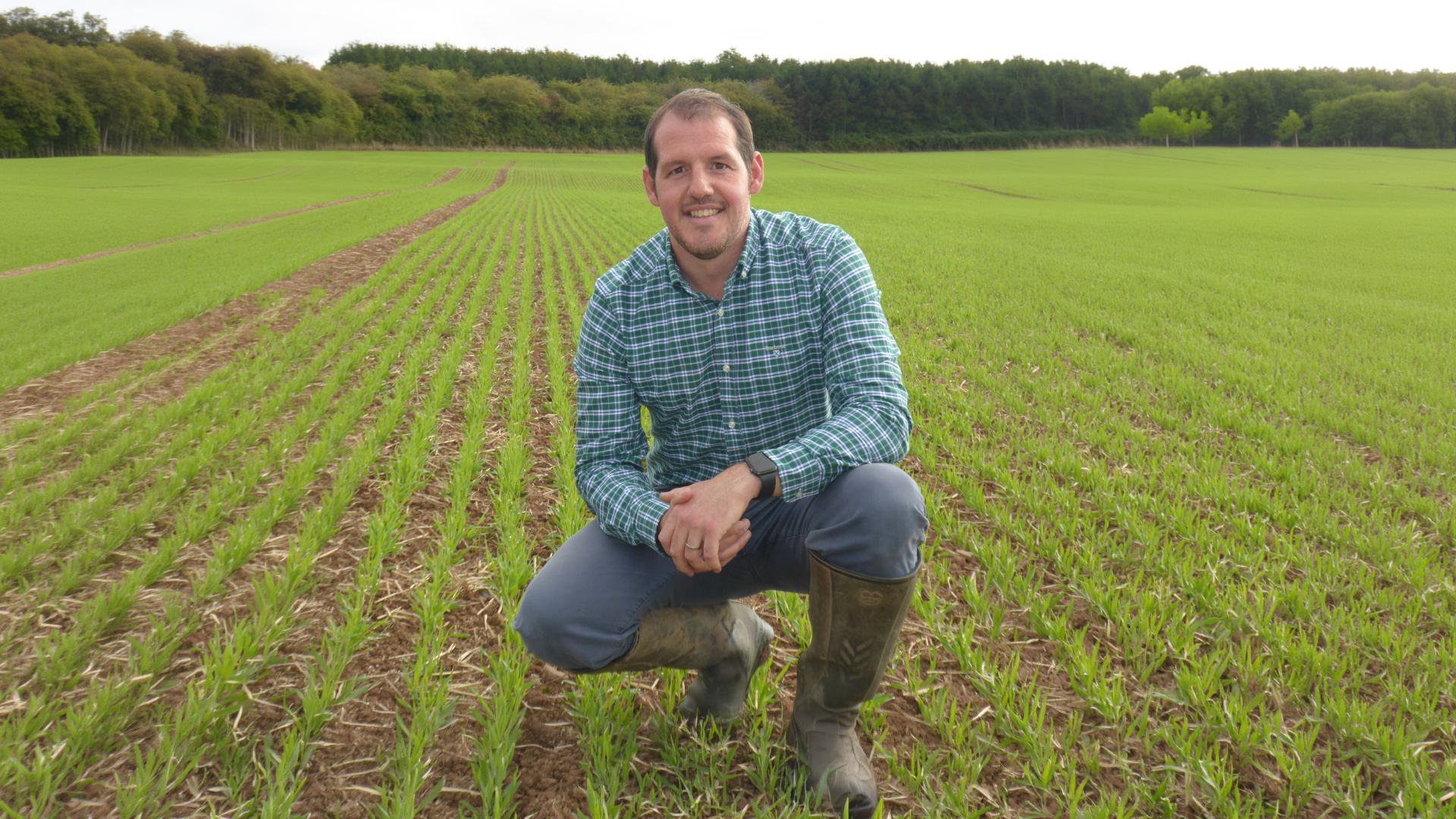

In this season update, four independent agronomists discuss current conditions and crop status, how the approval of a new herbicide in malting barley will improve grassweed control and, what they are doing to prepare for the season ahead.
Despite record-breaking rainfall across several counties this winter, wheat crops are, generally, clean and in good condition. A favourable autumn supported strong establishment, strong herbicide efficacy and the earlier reported risk of high in-crop grassweed germination has not materialised.
Malting contract volumes may have been halved, but spring barley remains a staple in many rotations. Grassweed control remains a priority where preserving yield potential is paramount.
Looking ahead, agronomists are analysing last year’s trials data and starting to consider this year’s fungicide strategies. Although the weather currently predisposes for septoria infections, there is ample likelihood for yellow rust. As well as planning for every scenario, agronomists are keen to protect high-risk SDHIs and recognise the need to deliver a return on investment.
Autumn herbicides give crops a clean start
“In January we had 100-150mm of rain – it is a lot for Kent,” says Simon Roberts of CCC Agronomy.
“Fortunately, most of the winter wheat has good root structures. They’ve tillered well too, so overall, establishment has been good.
“Though they are in the minority, some crops have sat wet. Those that were late drilled following potatoes, for example, are struggling a bit.”
With early drilling dates extending the season and relatively high soil temperatures accelerating the breakdown of residual herbicides, herbicide performance longevity was a key objective for all the agronomists this autumn.
“Over 80% of the winter wheat acreage had Luximo and it has done a great job,” says Simon. “Initially I was concerned about it having to tackle a larger number of grassweeds, given the early drilling, but the results have been reassuring.”
Across the country there is a similar picture. Chris Taylor of Down To Earth Agronomy based in South Wales, Herefordshire and Gloucestershire says many of his crops are forward.
“We are grazing them with sheep where we can. “It’s about managing them backwards rather than trying to push them on.
“With the moisture, the autumn herbicides have done a really good job, and crops will generally be clean going into spring.”
Up in Yorkshire, agronomist Julian Thirsk has been out with the knapsack sprayer applying manganese.
“Even on light sand, it will be a while before we get machinery onto fields.
“Where autumn cultivations were done well, crops are holding up. Even those drilled in December have come through nicely.”
Noting that current conditions favour black-grass, Julian describes a variety of herbicide situations.
“Most growers got two applications on, some later drilled crops got only one and need another. There are one or two that went in much later and didn’t get a pre-em. They may well warrant glyphosate come spring – but that is a tiny acreage.”
Grassweed control in spring barley
Despite the reduction in malting barley contract volumes, all the agronomists have spring barley in their rotations and acknowledge the need to proactively control grassweeds.
“Although 90% of black-grass germinates in September and October, if there’s sufficient seed in the seedbank that spring flush can cause a major problem,” says Simon.
Julian agrees, adding: “You can lose the yield potential of a spring barley crop quite quickly to ryegrass and black-grass.”
Much of Simon’s acreage will be coming out of cover crops which have been grazed by sheep over the winter.
“It’s not ideal as we will have to move the soil before drilling, which can stimulate another grass weed flush, but it is part of SFI and an important source of income.
“The worst black-grass affected area was moved in the autumn and subsequent flushes of grass were sprayed off, we don’t want the weeds getting too big and risking any resistance issues. A couple of days before drilling, we’ll apply glyphosate again. We’ll try to minimise soil disturbance at drilling and apply Luximo soon after.”
The British Beer and Pub Association (BBPA) of Great Britain approved the use of Luximo’s active ingredient, cinmethylin, for use in malting barley in April last year and it has quickly become a go-to tool where grassweed populations are high and/or difficult to control.
“Spring barley can help with black-grass control and get the autumn flush out the way before the crop goes in. While this is useful, cultural controls are only one part of IPM and aren’t perfect which is why good residuals like Luximo are so important,” says Simon.
Luke Bullock, who works in Wiltshire, Berkshire and Hampshire, stresses the importance of ‘integrated’ in Integrated Pest Management.
“Spring cropping should never be the sole tool; grassweeds adapt. Over‑reliance on spring cropping can shift germination patterns, so we must combine cultural and chemical control strategies.”
Next steps
Knowing that when fields dry out and soils warm up, the season will get busy quickly, the agronomists are all planning ahead.
“I’m currently soil sampling, nutrient and IPM planning as well as looking at all-important fungicide trials data,” says Simon. “As soon as we can travel, there will be a lot of field work to do. There are cover crops to burn off as priority then sulphur and nitrogen to go on.”
Chris has already been immersed in the graphs and spreadsheets: “I’ve been trawling through trials data this month and I have more to do before March. With the amount of rainfall we’ve had it is setting up to be a high septoria year. There are forward, lush crops around too. I’m also conscious of the impact that the breakdown of YR15 will have with some of the varieties that are in the ground.”
Changes in resistance scores are also at the forefront of Simon’s mind: “Given the varieties and the fact I’ve rust inoculum in some Crusoe already, it will definitely be a focus of the T0s. If we have high pressure at that time, T0s will be tebuconazole-based but if not, it’ll be centred around strobilurins.”
Chris has used a lot of Revysol over the last couple of years and notes its role as a solid all-rounder which is particularly useful at T1.
“I also used a bit of RevyPro in the barley,” he says. “I was pleased with how it performed. It was the previous year’s trials data that made me want to use it and the price point was competitive in comparison with other products in the market.”
While mindful of septoria, Julian also notes that there is a significant risk of carry over for yellow rust.
“It will be about weighing up the pressure during the season and putting together the best possible programme.
“I’m always mindful of resistance management but this year’s AHDB fungicide performance curves highlighted just how careful we need to be with the higher risk SDHIs. If it is a septoria year, we’ll need to alleviate the selection pressure on them and consider how we can best protect them.”
Simon agrees: “Resistance is always at the back of our minds. Every herbicide or fungicide decision must balance cost, efficacy and the risk of buildup.”
As the season heads towards spring’s critical weeks, agronomists agree that the key to success is vigilant monitoring and flexible tactics that respond to changing conditions. In short, the focus remains on keeping crops clean and healthy while protecting chemistry and delivering return on investment.