
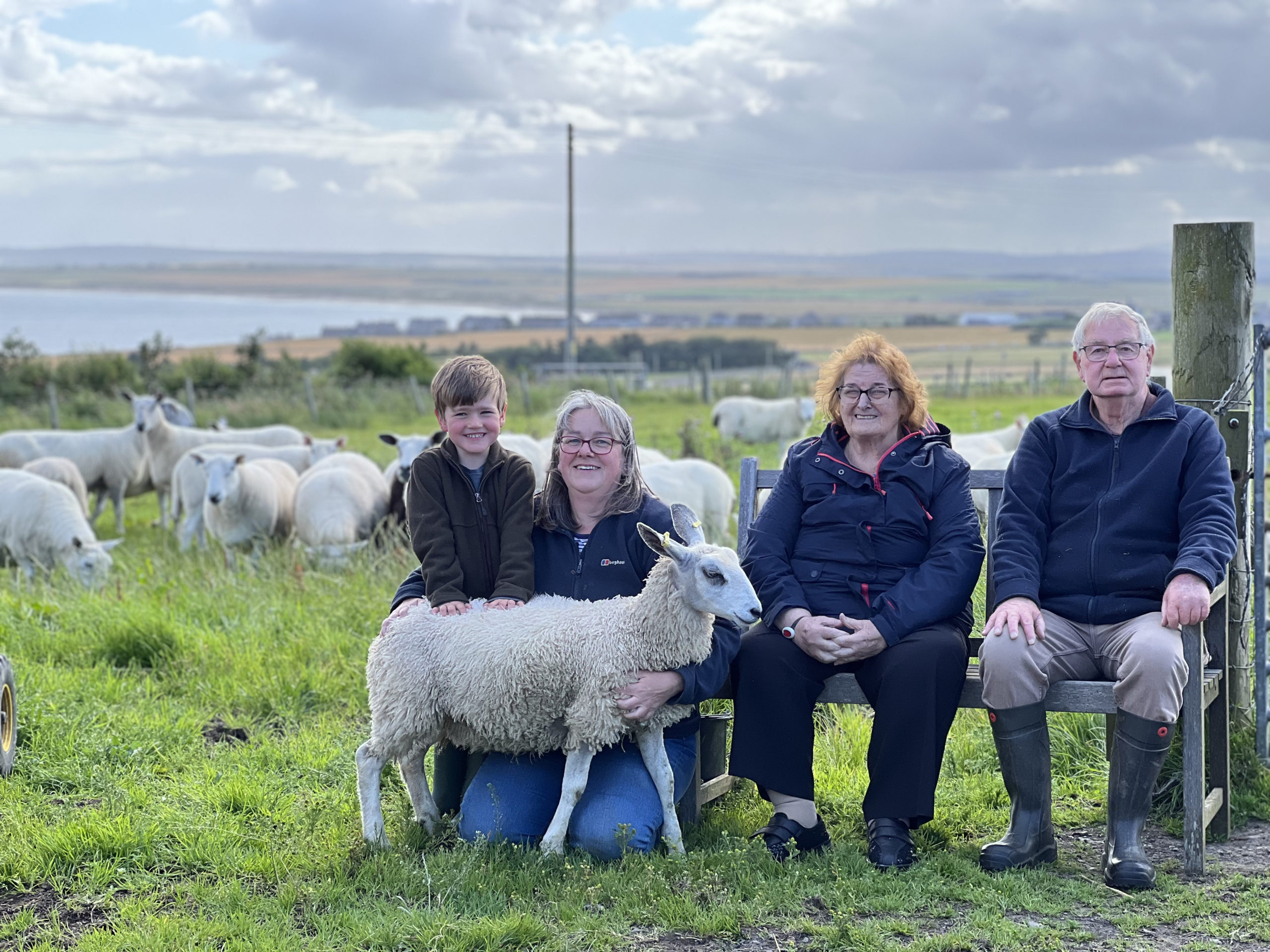

For Sally Crowe, the working week hasn’t always been so well planned, but a chronic illness left her with no choice but to reevaluate how she approached each day. “I now live by the ‘work smarter, not harder’ philosophy, with the phrase even pinned to my desk as a reminder every morning,” smiles Sally.
Crofting on 65 acres in Keiss, Caithness, This Farming Life star Sally, who has a six-year-old son William, swapped Texel sheep and Limousin cross cattle for easier managed Hill Cheviots and Irish Moiled after contracting the bacterial infection Q Fever around 12 years ago. The illness is spread from farm animals to humans with flu-like symptoms such as fatigue, fever, and muscle pain.
These ill effects can persist for months or years as Chronic Q Fever, which Sally unfortunately developed.
Finding a new way forward
Sally found herself going from a full-on life working multiple jobs, showing livestock and striving for perfection to being forced to rest for up to 17 hours a day, something which heavily affected her mentally and physically.
“The physical limitations were hard, but the mental aspect was harder,” notes Sally. “In farming and crofting, there’s this ingrained belief that ‘you must work hard’ and that really clashed with my sudden physical reality.
“Instead of using a Fitbit to make sure I was doing enough steps as most people do, I was having to use it to monitor them, so I knew when to stop – 3,000 a day was my limit. I really struggled with accepting that I couldn’t work the way I was used to.”
The turning point came when Sally attended a Doug Avery workshop in Thurso, organised by a group of industry leaders, many of whom are now Farmstrong trustees. “It was the first time I’d heard the phrase ‘work smarter, not harder’ – or at least the first time it had resonated so deeply. It was at this talk that I was introduced to the concept of resilience and changing your mindset, and it couldn’t have come at a more pertinent time for me and what I was going through.”
“I remember thinking that nobody was going to come and sort it out for me but that didn’t mean I couldn’t ask for help to make the changes. I got myself a mentor, I changed my livestock to suit my new working style, and I started to plan my time better.
“I tried online calendars and apps but actually found that a pen and paper suits me best. Now, on the first day of January every year I put up new calendars on the wall for home life and work life. I mark lambing and calving and any other big work events, and the next thing I mark is our holidays. I love the visual aspect of it.”
New year, new goals
It’s not just calendars that Sally likes to have in front of her, every January she also sits down and writes out 50 personal goals for the year ahead. “I’ve got some big ones on there like ‘being debt free by the end of 2026’ but also some trivial fun ones like ‘find a pair of socks that don’t roll down inside your wellies’, there’s no pressure to meet them all, I don’t mind rolling them over into subsequent years, but I do love looking at it around August time and ticking off what I’ve done, I usually manage 35-40 of them.
“As well as that annual list, I also sit down at the start of each month and do some focused monthly ones for the business – again, there’s no pressure to meet them all but just gives me good structure and is great to look back at all you’ve done.”
Living in a multi-generational household with her dad Iain, who helps on the croft as her mother did before moving into a care home, Sally also started working on her mindset. She learned to accept that a job done but not perfect was good enough on the days she was tired or not feeling her best.
“Changing my mindset was not easy. It was about giving myself permission to change how I did things and accept that not everything has to be done today. The person I used to be, working 12- or 15-hour days didn’t make me a better crofter – earning a good living, but being more efficient with my time and strict with working boundaries makes me enjoy it more, and probably makes me a better crofter.”
One practical example of this shift came during a lambing season. “By the end of lambing, the kitchen floor probably needed a bobcat to muck it out,” Sally laughs. “Dad and I were clashing over who should clean it – mum wasn’t mobile, William was too little, and neither of us had time. I finally thought, why are we arguing? Let’s just get someone in.
“Now a cleaner comes once a fortnight. It’s one pressure point removed. She’s bubbly, she flies around, and it gives me a clean reset. Yes, it costs money, but it’s worth every penny for my wellbeing. That’s the kind of help I’m talking about – identifying what drains you and finding solutions.”
Building a life, not just a business
In recent years, Sally has added value to her business by selling meat boxes and eggs direct to consumers and also making sheep skins and tallow candles to sell on.
Launching in 2026, she is establishing a new online community “My Wee Croftie” where, in an online classroom environment, she will help those who are looking to set up their own meat box businesses or build other diverse income streams from their farms or crofts.
Sally’s meticulous planning and strict working times means she still finds time to do the things she enjoys every week.
“Despite the mindset changes being difficult, I’m now actually very protective of my time and my energy, and ultimately my wellbeing.
“Annual holidays and time off at weekends are non-negotiable. Every Friday night is movie night for me and William. We also go swimming every Sunday morning, and we’ll go out for a four or five mile walk most weekends. I’m working smarter and the result is that I love the life I’m building for myself. Making the croft work for me, instead of the other way round.”
Sally’s advice to other farmers and crofters struggling with burnout or imbalance is simple. “Learn what ‘good enough’ is for you and accept it. If all you manage one day is feeding and watering your stock and feeding yourself, that’s okay.
“And stop telling yourself you can’t go on holiday because nobody else can look after things. Your neighbour or friend might not do it exactly the way you do, but for a few days, does it really matter if they go round the shed a different route? As long as the cattle are fed, watered and standing upright, let go of some control and go enjoy yourself. Then you can repay the favour and allow them to do the same – and that’s a good feeling too.”