
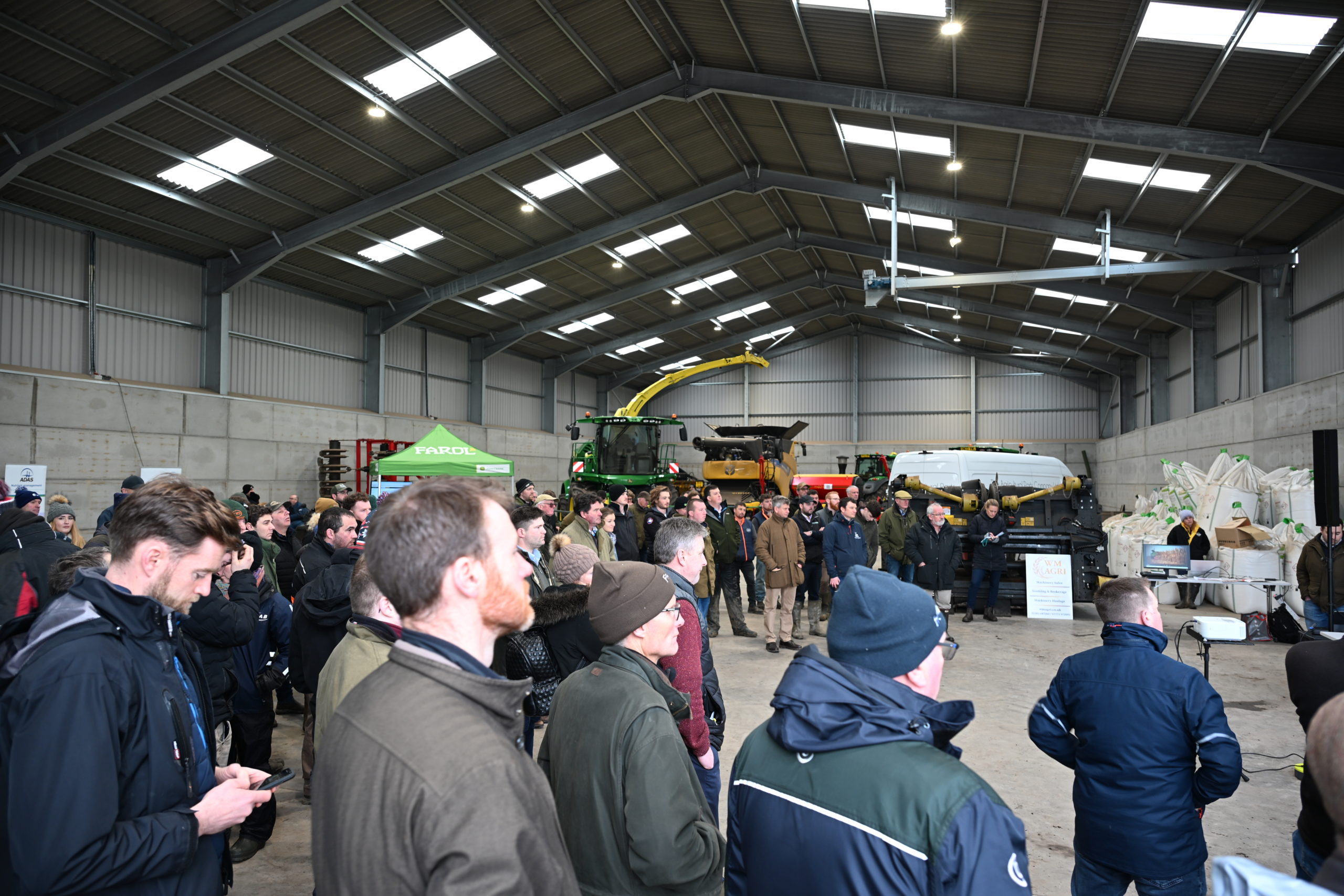

Almost 190 farmers and maize specialists attended the Maize Growers’ Association (MGA) Annual Conference in Leicestershire on 4 and 5 February, marking the highest attendance in the event’s recent history as growers seek profitable alternatives to traditional break crops.
The record numbers reflect the increasing area of maize in the UK, with 240,000 hectares grown in 2025. The two-day event covered all aspects of maize production, from crop establishment and nutrition to market opportunities and the latest efficiency-optimising technology.
“The numbers of delegates, trade stands, sponsors, researchers, advisers and most importantly growers here today are the strongest we’ve seen in recent years,” said MGA Chairman Michael Jarmuz. “The Council is genuinely delighted, not just because the event is bigger, but because it reflects a crop, a multi-market sector, and a grower community that is moving forward with confidence.
“The question for many farmers is no longer “Should we consider maize?” but “How do we make it work on our farm?”
Day one took delegates out of the conference hall and onto a working farm. Will Oliver, Vice Chair of the NFU Midlands Crops Board and the MGA, hosted the record crowd at his family’s 2,000-acre Fenn Lane Farm near Nuneaton.
Will demonstrated how maize has transformed farm profitability. He explained how integrating on-farm poultry production generating 1,900 tonnes of chicken litter annually has reduced fertiliser costs while qualifying for Sustainable Farming Incentive payments worth £406 per hectare.
“Justify every decision with information: test, test, test,” Will told attendees, explaining his data-driven approach centred on regular testing to optimise nitrogen application. His balance sheets revealed that year-on-year maize margins outperformed wheat and oilseed rape, particularly when combined with SFI options.
Will also spoke about the growing membership at the MGA. “It’s not just the information available; it’s speaking to other people growing maize and sharing that knowledge. The stronger the MGA membership is the more funds we have available for crop trials, the more maize is available, and we can fulfil the supply to more markets – there are opportunities for grain maize with additional markets opening up.”
Attendees also saw innovative integration of sheep grazing on cover crops, with local shepherd Matt Harding’s Bentley Suffolks demonstrating how rotational grazing adds £140 worth of nutrients per hectare while improving soil organic matter and creating ideal seedbeds for maize.
Delegate Rob Alexander from South Norfolk who was attending the conference for the first time was impressed by the depth of conversation: “It’s been very informative, from managing sheep on the cover crops right through to harvesting grain.
“The key reason I’ve attended is we’re looking at the options of growing maize and learning more about the varieties that are available and how profitable the crop is in the real world. This is the first time I’ve visited, I’m really impressed by the number of people, not only growers to share experiences with, but also a lot of people from the trade.”
Day two at Hinckley Hotel featured presentations from leading agronomists and commercial growers.
Ben Abell, Head of Agronomy at Dyson Farming’s 14,000-hectare operation, explained their tech-driven approach including Bilberry smart spraying for spot weed treatment on maize, delivering significant cost savings. As well as being passionate about British produce, Ben was positive about the future of maize, crediting the MGA with how progressive breeding and genetics are for the crop, thanks to its trials.
MGA Technical Lead Jon Myhill presented the independently run crop trial results showing that pulling back nitrogen to 125-150kg N/ha maintains optimum yields, with foliar nitrogen increasing nutrient use efficiency by 20-30%. “Nitrogen timing is crucial to avoid hungry periods during reproductive times,” Myhill explained. Trial results demonstrated that foliar nitrogen application can deliver £30 per hectare savings without compromising metabolizable energy or starch content.
The conference also featured presentations from ADAS, Germinal, NIAB, AHDB, and Farol John Deere, who demonstrated the Harvestlab 3000 NIR sensor that continuously monitors harvest quantity and quality in real-time.
As traditional break crops struggle – with oilseed rape risky, spring barley suffering in drought and market conditions, and beans and peas following boom-bust cycles – maize is offering growers both agronomic benefits and viable margins across grain, forage, and anaerobic digestion markets.
“Resilience in farming is key, we need diversity of cropping,” said the NFU Deputy President David Exwood. “Maize creates diversity, profit, and ability to use it right across the rotation. The NFU Confidence Survey showed low farmer confidence, which means low investment, but maize is offering a solution to allow farming to progress, to increase returns.”
The record attendance underscores growing industry confidence that maize offers genuine solutions where traditional options are falling short.
The MGA is open to members from across the UK, with prices to join starting at £156 per year. Benefits include unrestricted and exclusive access to data, insights and research carried out by the MGA, as well as access to the technical team, made up of an agronomist, nutritionist and sustainability consultants. Also included is access to free online webinars, meetings, and discounted tickets to events.
To find out more on becoming a member go to https://www.maizegrowers.com/