
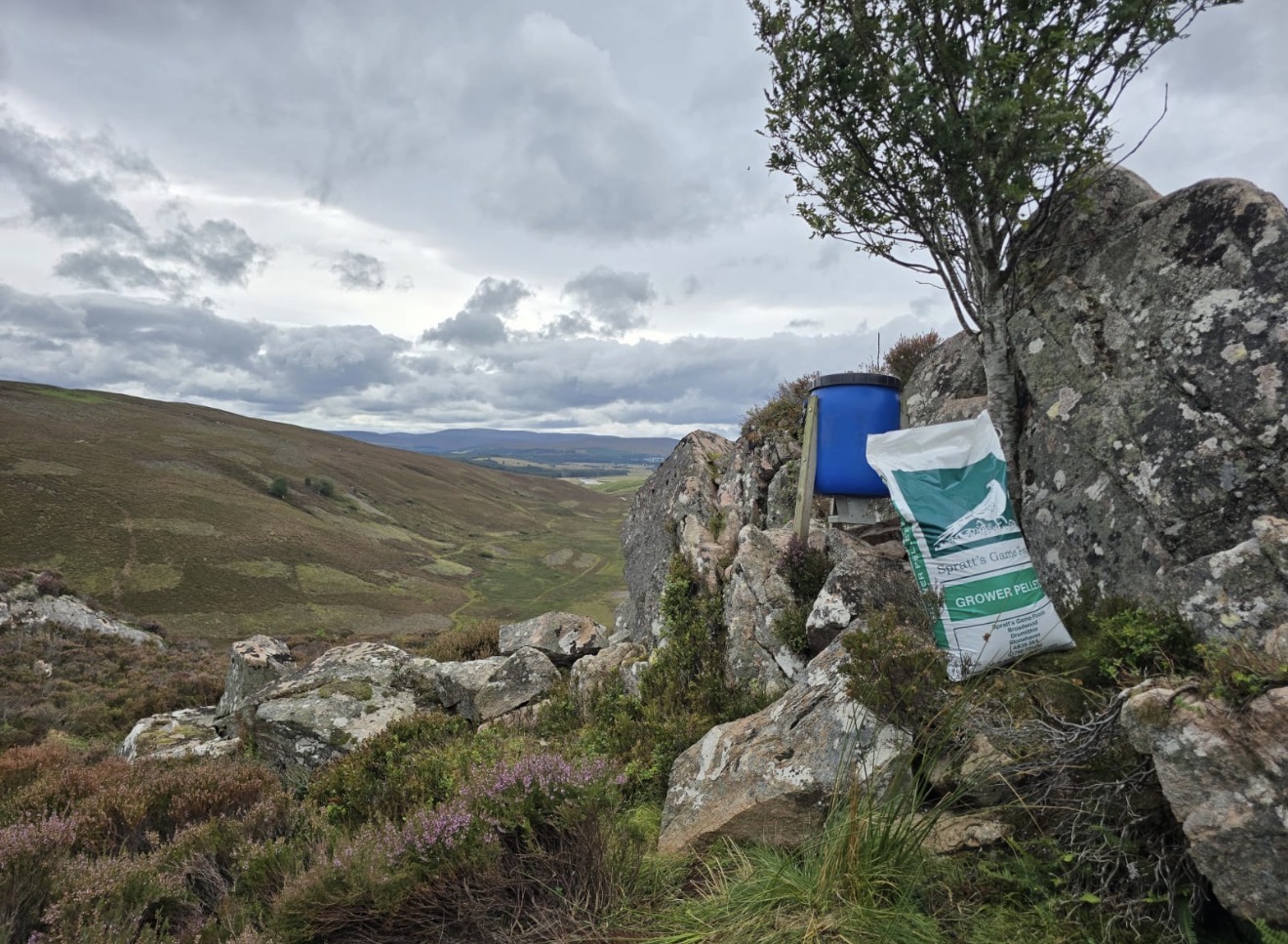
A feed trial to improve the performance and quality of partridge has proved successful for a Highland sporting destination.
Last season, Aberdeenshire-based Spratt’s Game Foods and Premier Nutrition worked with a shoot manager looking to meet the challenges of a high altitude and often cold Highland climate for a prestigious partridge shoot.
The shoot manager has been focusing on maximising every aspect of the ground with marginal gains to create something really special for the owners and guests. Part of this has been to focus on healthy birds that fly well and can confidently meet a full calendar, as well as ensuring good quality in the larder.
“In the Highlands the terrain and climate can be challenging for partridge,” explains Louise Fotheringham, specialist nutritionist at Spratt’s Game Foods, the family-owned business which mixes its own game feeds at its mill at Drumlithie.
“It is often colder and wetter than other parts of the country, and on the heather moor they don’t have the same cover as a lowland shoot. By being proactive with a welfare and habitat plan, it gives the partridge every assistance from the start to thrive in these conditions.”
Over the past season, Louise has worked alongside poultry nutritionist Ralph Bishop at Premier Nutrition to trial bespoke nutrition at different stages to help improve the condition, fitness and ability of the partridge to thrive in this extreme environment. This is the first trial of its kind and prompted by the growing demand for quality nutrition for partridge.
“Precise nutrition makes all the difference to getting the best returns. We looked at the variables that the sporting business is contending with to tailor the feed, introducing a high-density grower and changing the time periods of feeding, factors that impact healthy growth and condition and the ability to thrive in an extreme environment,” explains Louise.
The trial started with one pen, but after two weeks of driving the birds, the shoot manager could see the difference and moved 100% of the partridge to Spratt’s high density grower. He reported that the birds were flying well, they handled terrain better when being driven, committing to big heights to cross over deep valleys.
In the larder they were also in fantastic condition, he said, and at the end of the season he could see that the investment in higher specification feeds had been paid back in a better return percentage and fitter, healthier birds.
Taking the research out of the lab into the field is so vital, especially for game birds where less of this has been done, explains Louise.
“Ralph and I have seen the value of the appliance of science at scale during this project. We worked closely with the shoot manager throughout, monitoring and making decisions together, seeing what’s right for the birds and adjusting to what he was seeing and telling us.”
One key ingredient of success is the inclusion of probiotics. Following extensive research in recent years with St David’s Vets and customers, Spratts Game Foods now includes probiotics in all of its feeds as standard.
“It’s become clear how vital probiotic bacteria is to good returns,” says Louise. “If you can support the birds with a probiotic from day-old, they build a strong gut microbiome which means they absorb more nutrition from feed and build up a stronger immune system and consequently a drop in antibiotic usage.”
With its own on-site mill and a close working relationship with Premier Nutrition, Spratt’s Game Foods is able to respond quickly to feedback and the research results.
“It’s this flexible and tailored approach which can make all the difference to performance and profit margins for a sporting estate,” adds Louise. “Having seen the positive results of this trial in action, we’re launching a new feed range for partridge and pheasants that’s specifically tailored to enhance nutrition and performance in more challenging climates and terrain.”